You train hard, you show up consistently, and then something starts to hurt. Maybe it is a nagging knee on your runs along the Strand, a shoulder that complains during volleyball season, or a low back that tightens after long days at your desk. You may have already tried rest, rushed appointments, or generic exercise sheets, and you are still not back to where you want to be.
That frustration is common, and you do not have to accept it as normal. Performance physical therapy in Torrance, CA is built for people who want more than temporary relief. It is about finding the root cause of your pain, measuring how you move, and rebuilding your body so you return to your sport or active lifestyle stronger and more resilient. This guide explains how it works, what to expect, and how Renew Sports Rehab approaches it.
What Is Performance Physical Therapy?
Performance physical therapy combines injury rehabilitation with athletic development. Traditional rehab often stops when your pain settles and you can handle daily activities. Performance physical therapy keeps going until you can meet the actual demands of your sport, workout routine, or job.
That means looking at more than the painful area. Your therapist evaluates how you load, rotate, absorb force, and produce power. Pain often shows up in one place while the contributing factor sits somewhere else, such as limited hip mobility, weak stabilizers, or inefficient running mechanics.
Performance physical therapy typically includes:
- A detailed history and movement assessment
- Objective testing to measure strength, power, and mobility
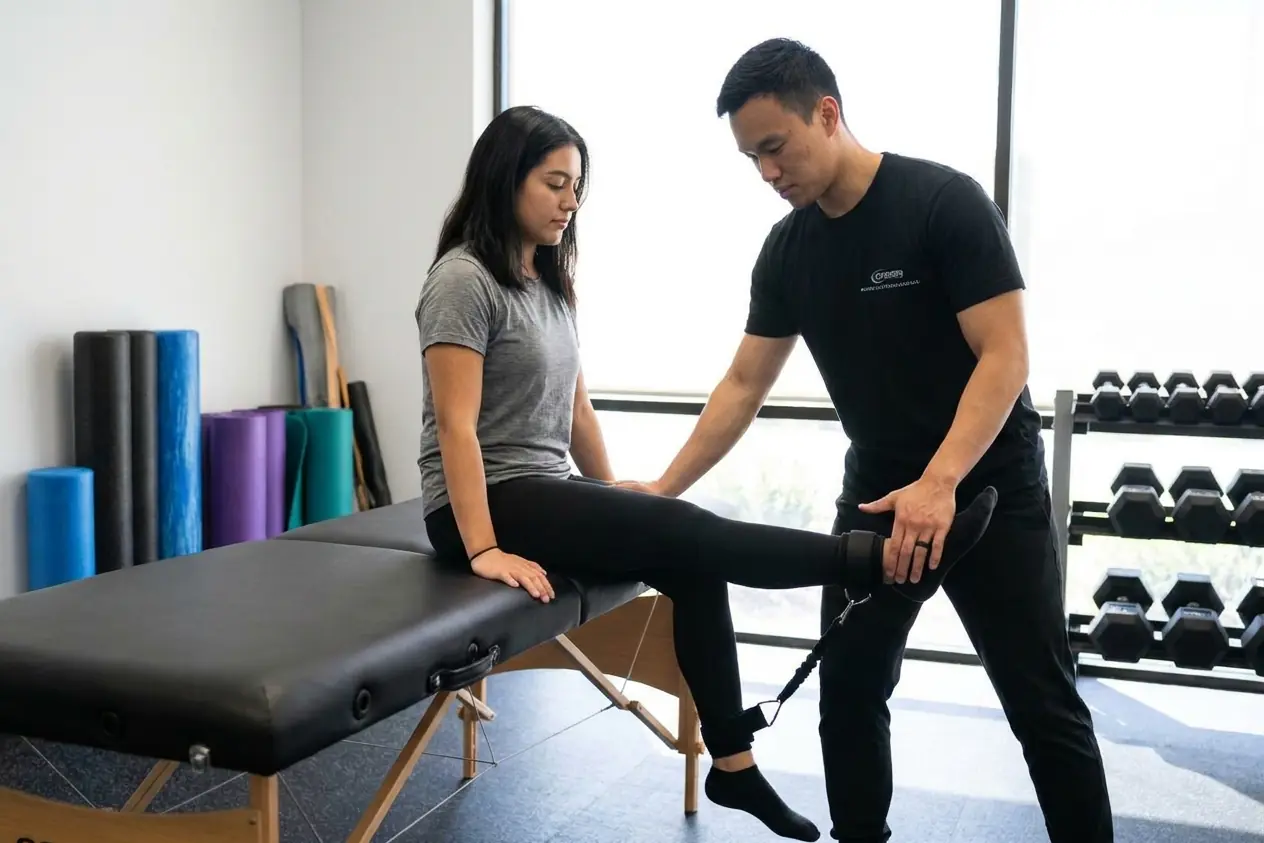
- Hands-on treatment to reduce pain and restore motion
- Progressive exercise and training matched to your goals
- A structured return to sport or return to running plan
The result is a plan built around what you want to do, not only what hurts.
How Is Performance Physical Therapy Different From Traditional Physical Therapy?
Many active adults share the same story. They arrive at a busy clinic, spend a short time with a therapist, get handed to an aide for exercises, and finish with heat or ice. Their care can change from visit to visit depending on who is available. Progress feels slow, and nobody is measuring whether they are actually ready for their sport.
A performance-based approach is different in several important ways.
Time and Attention
At Renew Sports Rehab, every session is a full 60 minutes, one-on-one with your physical therapist. There are no aides and no handoffs. Your time goes toward assessment, skilled manual therapy, and exercise progressions rather than passive modalities that add little to your recovery.
Continuity of Care
You work with the same therapist from your first visit to your last. That consistency matters. Your therapist knows your history, notices subtle changes, and adjusts your plan without conflicting approaches from different clinicians.
A Goal Beyond Pain Relief
Pain relief is a milestone, not the finish line. A performance approach asks whether you can sprint, jump, lift, swing, or run the distance you want without symptoms, and whether you can keep doing it. This model is built to support faster, more individualized care without the scheduling limits that come with high-volume clinics.
What Does a Performance Assessment Include?
Guesswork is the enemy of a fast recovery. A thorough assessment gives you and your therapist a clear starting point and a way to track progress. Depending on your goals and condition, your evaluation may include several of the following tools.
Movement and Functional Assessments
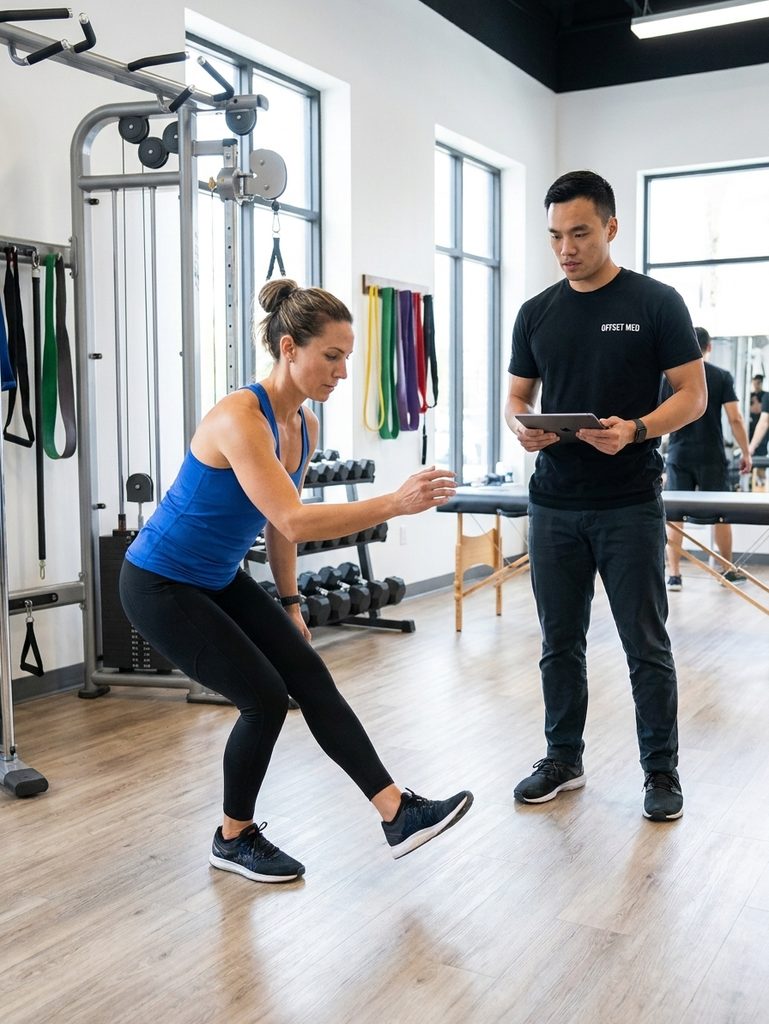
A movement screen and functional movement assessment show how you squat, lunge, balance, rotate, and control your body. These tests can reveal asymmetries, restricted joints, and compensation patterns that contribute to overuse injuries.
Strength and Power Testing
Force plate testing measures how you produce and absorb force during tasks such as jumping, landing, and squatting. Isokinetic and dynamometer testing quantifies muscle strength through controlled movement speeds. Comparing one side to the other is especially useful after a knee, hip, or shoulder injury, because it helps identify deficits that may not be obvious during everyday movement.
Running and Cycling Analysis
If you run, a running gait analysis and running form assessment examine your stride, cadence, foot strike, and joint loading. If you ride, a bike fit looks at positioning so you can stay comfortable and efficient. Small changes in mechanics can make a meaningful difference when you repeat the same motion thousands of times.
Endurance and Sport-Specific Testing
VO2 max testing estimates how well your body uses oxygen during hard effort, which helps guide training for endurance athletes. For golfers, Titleist Performance Institute (TPI) testing screens the physical limitations that may affect swing mechanics. Return-to-sport testing checks whether your strength, power, and movement quality are ready for the demands of competition.
These results are not just numbers. They shape your treatment plan and give you clear benchmarks to work toward.
Which Treatments Help You Recover Faster and Build Resilience?
Once your therapist understands your movement and your goals, treatment combines hands-on care with progressive training. Your plan is matched to your condition, your stage of recovery, and your sport.
Manual Therapy and Soft Tissue Work
Hands-on techniques help reduce pain, improve joint motion, and prepare your body to move well. Your plan may include joint mobilization, myofascial release, soft tissue mobilization, trigger point therapy, IASTM (Graston), cupping, or taping, depending on what you need. These techniques work best when paired with exercise that retrains your body to hold those gains.
Therapeutic Exercise and Neuromuscular Re-Education
Strength and control are what keep you healthy over time. Therapeutic exercise rebuilds capacity in muscles and tendons, while neuromuscular re-education retrains how your brain and muscles coordinate movement. Balance and proprioception training helps your body respond quickly to changes in terrain or direction, which matters for ankle sprains, knee injuries, and fall prevention.
Blood Flow Restriction and Plyometrics
Blood flow restriction (BFR) training uses light loads with a specialized cuff, which can be useful when heavy lifting is not yet appropriate, such as after surgery or during a painful phase of tendon rehab. Research supports BFR as a way to build muscle strength with lower loads. Plyometrics and return-to-sport progressions then bring back jumping, cutting, and landing in a graded, controlled way so your body can handle the speed of your sport.
Shockwave Therapy
For persistent tendon or soft tissue problems, Renew Sports Rehab offers shockwave therapy (ESWT). It is a noninvasive, drug-free, needle-free treatment that uses acoustic waves. Research suggests shockwave therapy may help conditions such as plantar fasciitis and chronic tendinopathies, and your therapist will determine whether it is appropriate for your situation.
Assisted Stretching and Recovery
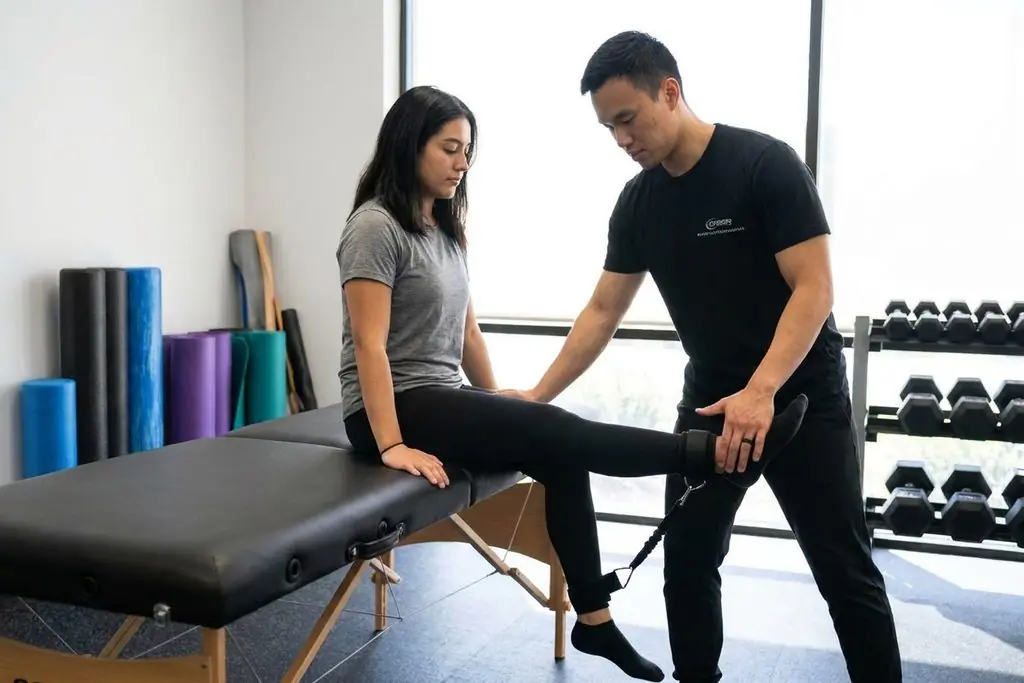
Assisted stretching supports mobility and flexibility, especially when training volume is high or you feel stiff from work and sport. It fits alongside your strength work rather than replacing it.
Who Benefits From Performance Physical Therapy?
You do not have to be a professional athlete to benefit. Performance physical therapy works for anyone who wants to move well and keep doing what they love.
Runners, Cyclists, and Golfers
Repetitive sports tend to expose small mechanical flaws. Runners often deal with runner’s knee, IT band syndrome, shin splints, Achilles tendinopathy, or plantar fasciitis. Cyclists may struggle with knee, hip, or low back discomfort. Golfers frequently develop back, hip, shoulder, or elbow issues. Running gait analysis, bike fit, and TPI testing help address the cause rather than only the symptom.
Team and Court Athletes
Volleyball, basketball, soccer, tennis, and baseball place high demands on the shoulders, knees, hips, and ankles. Common problems include ankle sprains, ACL injuries, hamstring strains, groin pain, rotator cuff injuries, and shoulder impingement. A structured return-to-sport plan reduces the guesswork about when you are truly ready to compete.
Busy Professionals, Parents, and Older Adults
If you spend long hours at a desk, you may deal with neck pain, headaches, mid back tightness, or low back pain. Active parents need strength and mobility to keep up with daily demands. Older adults often want to stay independent, maintain balance, and age strong. Performance physical therapy supports posture improvement, strength building, mobility, and fall prevention for all of these goals.
Conditions Commonly Treated
The team at Renew Sports Rehab treats a wide range of conditions, including:
- Low back pain, sciatica, neck pain, and mid back pain
- Shoulder pain, rotator cuff injuries, frozen shoulder, and impingement
- Tennis elbow, golfer’s elbow, wrist pain, and carpal tunnel
- Hip pain, hip impingement (FAI), labral tears, and groin pain
- Knee pain, meniscus injuries, ACL injuries, and patellofemoral pain
- Achilles tendinopathy, plantar fasciitis, ankle sprains, and overuse injuries
- Headaches, migraines, dizziness, vertigo (BPPV), concussion symptoms, and TMJ pain
You can explore the full range on the Renew Sports Rehab services page.
Why Do Therapist Credentials and Experience Matter?
Performance care is only as good as the clinician guiding it. Complex injuries and high goals call for advanced clinical reasoning, not a one-size-fits-all protocol.
The physical therapists at Renew Sports Rehab are residency and fellowship trained, a level of postgraduate training held by less than 1% of physical therapists worldwide. Clinicians also hold dual board certifications, including both the Orthopedic Clinical Specialist (OCS) and Sports Clinical Specialist (SCS) credentials. Together, these reflect deep knowledge of orthopedic conditions and the specific demands of sport.
The team’s expertise spans orthopedics, sports, neurology, vestibular care, and performance. That breadth matters when your situation is not straightforward, such as when dizziness, headaches, or concussion symptoms accompany a musculoskeletal injury.
Experience also counts. The therapists at Renew Sports Rehab have worked with professional athletes from the NBA, MLB, NFL, EPL, and AVP, as well as Olympians. The same standards used for elite athletes guide the care provided to weekend runners, parents, and professionals. You can learn more about the team on the meet the team page.
How Do Mobile Visits and Direct Access Make Care Easier?
An effective plan only works if you can follow through. Busy schedules, traffic, and long waits are some of the biggest barriers to consistent rehab.
Concierge Mobile Physical Therapy
Renew Sports Rehab offers a concierge mobile physical therapy model, bringing treatment to your home or office in the Torrance area. You get the same full 60-minute, one-on-one session without commuting or time away from your day. For many busy professionals and parents, that convenience is what makes consistency possible.
Direct Access Without a Referral
California allows direct access to physical therapy, which means you do not need a physician referral to begin. If you are hurting now, you can schedule an evaluation right away rather than waiting for another appointment first. If your therapist sees signs that you need additional medical evaluation, they will tell you and guide your next step.
What Should You Expect From Your First Visit?
Knowing what happens at the start helps you feel prepared. Here is the typical flow:
- A conversation about your goals. You describe your pain, your history, and what you want to get back to, whether that is a race, a season, a golf round, or chasing your kids without pain.
- A hands-on exam and movement assessment. Your therapist examines the painful area and the areas that influence it, using testing that fits your needs.
- A clear explanation. You learn what is driving your symptoms, what the plan looks like, and how progress will be measured.
- Treatment starts right away. You leave with hands-on care and a focused set of exercises, not just an evaluation.
From there, your plan progresses from pain relief to strength, power, and sport-specific training. Retesting along the way shows you what has improved and what still needs work. When your results match your goals, you move forward with confidence and a plan to stay healthy.
You can read more about Renew Sports Rehab on the home page or browse additional guides on the blog.
Ready to Move Better and Perform Stronger?
You do not have to settle for chronic pain, rushed appointments, or a recovery plan that stops before you are ready. Performance physical therapy gives you clear testing, expert one-on-one care, and training built around your goals.
If you are an athlete or active adult in Torrance, take the next step today. Contact Renew Sports Rehab to book your appointment and start building a plan that gets you back to the activities you love with confidence.
